A caregiver without knowing it: the invisible tasks, counted
Published · 4 min read· Lire en français
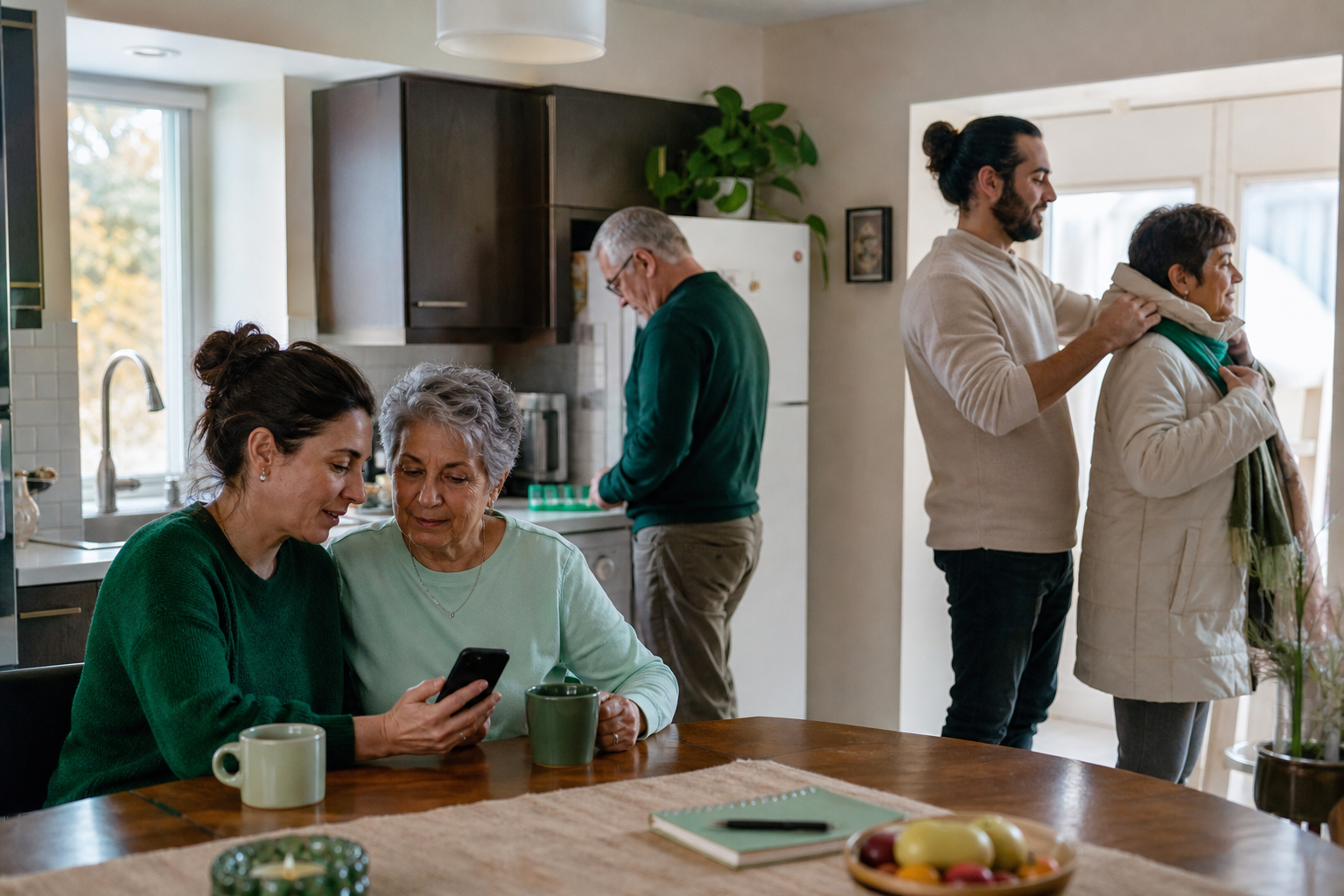
More than a third of Québec’s family caregivers do not see themselves as caregivers: 35%, according to L’Appui’s 2022 survey. They drive, call, remind and organize, and call it “helping my mother”. Here are the tasks the Institut de la statistique du Québec measured, the invisible work no statistic counts, and what recognizing yourself changes.
Why so many people do not call themselves caregivers
“I’m not a caregiver, I just look after my mother.” L’Appui hears this sentence often. In its survey conducted by SOM in November 2022 among 5,181 respondents, 35% of caregivers did not spontaneously see themselves as caregivers. Only when they went through the concrete things they do did they realize they qualified.
The reasons are human. You help a parent because it is normal. You have no diploma, no schedule, no salary. The word “caregiver” seems reserved for people who do bathing or nursing. Yet Québec’s 2020 law is clear: a caregiver provides continuous or occasional support to someone in their circle who lives with a disability, without being paid for it. Driving, errands, paperwork and emotional support count as much as hands-on care.
Not recognizing yourself has a real cost. Respite services, leave provisions, tax credits and support groups are aimed at caregivers. If you do not put yourself in that category, you never look for them.
The tasks the statistics institute counted
The Institut de la statistique du Québec’s 2024-2025 survey on the health and well-being of caregivers (news release of June 17, 2026) gives a concrete list of what Québec’s 2,076,000 caregivers, 27% of people aged 15 and over, actually do:
- 84% provide emotional and psychological support;
- 70% help with transportation;
- 58% help with housework;
- 50% help with meals.
Time varies: about 61% spend one to four hours a week on average, and 10% spend 20 hours or more. Women are proportionally more numerous (30% of women versus 25% of men), and 40% of caregivers are between 45 and 64, the age when many also have children and a job: for 59%, work is their main occupation.
Read the list again. If you do even one of these things for someone, regularly, you are among the 27%.
The invisible within the invisible: coordination
One task the survey does not measure on its own, because it hides inside all the others, is coordination. Knowing who is going to the pharmacy, who gave the noon pill, who is driving Thursday, whether the doctor changed the dose, whether the refill was done. It is the work of the person who “holds the thread”, and it is almost always one person per family.
It looks like this. Tuesday, 8:02 a.m., group text: “Did you give Mom her pills?” 8:04: “I thought it was you.” 8:05: “I’m at the office.” Three adults, three cities, one doubt. Nobody did anything wrong. All that is missing is a record everyone can see.
Making this work visible is the first step to sharing it. An up-to-date medication list, reviewed by the pharmacist, on the fridge. A shared calendar for appointments. And for “who did what, and when”, a shared record. In Soinly, each dose is confirmed with the person’s name and the time, “Confirmed by Luc at 8:32 a.m.”, visible to the whole family the second it exists, even from a distance. If nobody confirms, a reminder goes out at the scheduled time, a second one 15 minutes later, and the family is alerted at 30 minutes. It is not a medical service, and any question about a medication goes to the pharmacist; it is a way to make invisible work exist so that someone else can take it on.
Recognizing yourself, and then what
Calling yourself a caregiver changes nothing about what you do. It changes what you have access to.
- Call Info-aidant: 1 855 852-7784. L’Appui’s line, free and confidential, Monday to Friday from 8 a.m. to 6 p.m., with service in English. You do not need a crisis to call. Say what you do; they will tell you what exists in your region.
- Try aporteedemots.ca. A few words about your situation, and L’Appui’s tool suggests resources near you.
- Read the caregiver section of Québec.ca. Rights, leave, tax credits, services. Amounts and conditions change: check at the source.
- Tell your employer, if you can. Proche aidance Québec works with companies on balancing caregiving and work; you are not the first to raise it.
- Tell others. From November 1 to 7, 2026, it is Québec’s National Caregivers Week. Proche aidance Québec’s theme, “Apprenons à voir l’invisible” (let’s learn to see the invisible), and L’Appui’s, “Prends soin de toi, aussi” (take care of yourself, too), were made for exactly that.
Learn more
Sources
- L’Appui, enquête SOM de novembre 2022 (5 181 répondants) : 35 % des proches aidants ne se reconnaissent pas a priori comme tels.www.lappui.org
- Institut de la statistique du Québec, communiqué du 17 juin 2026 : 27 % des 15 ans et plus, 71 % auprès d’une personne de 65 ans et plus, 59 % en emploi, types d’aide et heures par semaine.statistique.quebec.ca
- Québec.ca : définition de la personne proche aidante, loi de 2020, droits, mesures et services.www.quebec.ca
- L’Appui pour les proches aidants : thème « Prends soin de toi, aussi », trousse, épisode en direct, Info-aidant (lundi au vendredi, 8 h à 18 h) et aporteedemots.ca.www.lappui.org
- Proche aidance Québec : dates (1er au 7 novembre 2026) et thème « Apprenons à voir l’invisible » de la Semaine nationale des personnes proches aidantes.procheaidance.quebec
Written with AI assistance and reviewed by the Soinly team.